C12 Business Forums — the native app
An assessment of both shipping apps read from source, two design boards mapping current iOS and Android capability onto how C12 members actually work, and two fully interactive prototypes — one per platform.
Start here
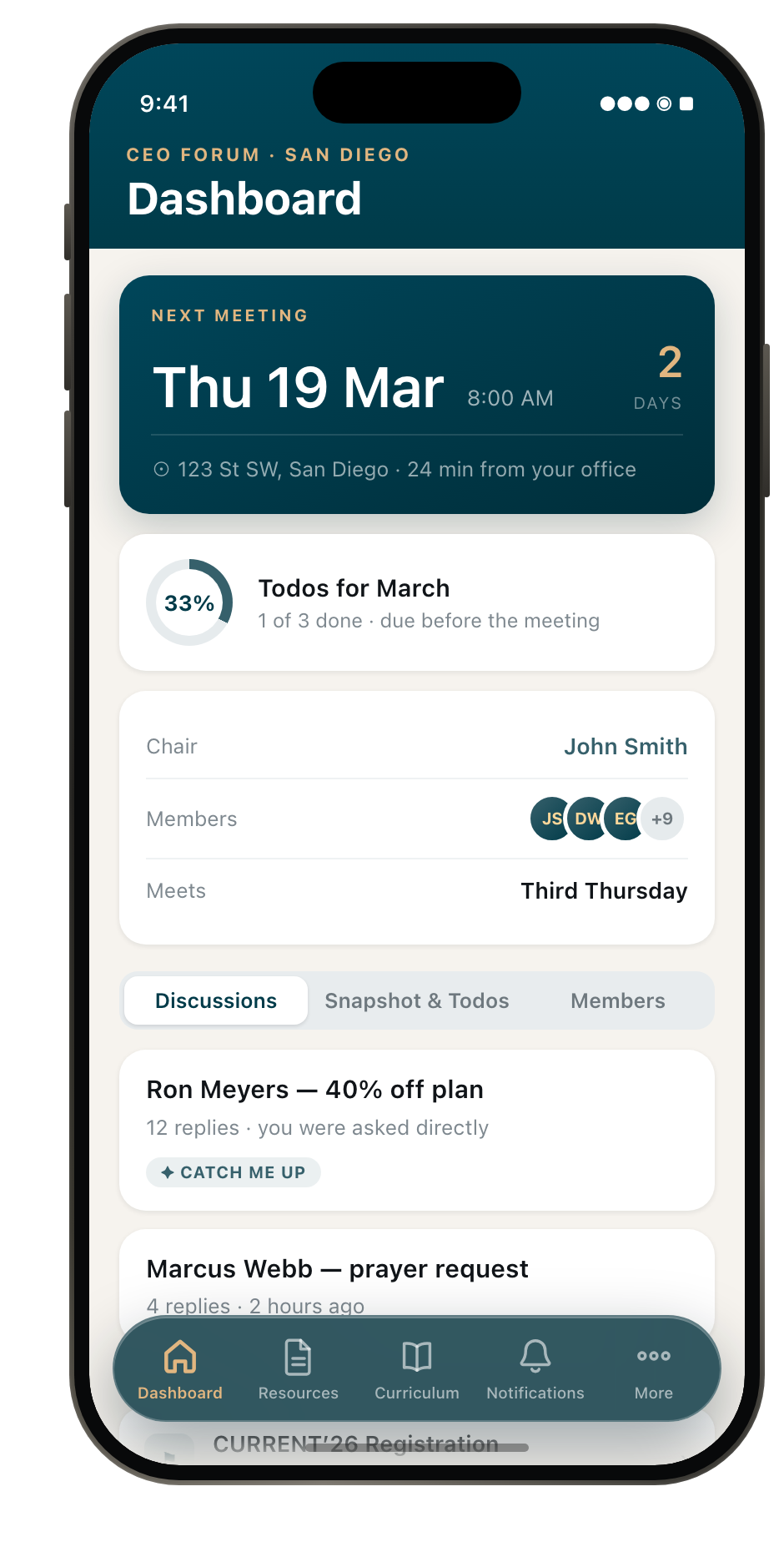
The prototype
Sixteen scenes on a real iPhone frame. Tap anything — tick a widget, draft a reply, scan a P&L, unlock with Face ID. Press Space to watch it play itself.
Open the prototype →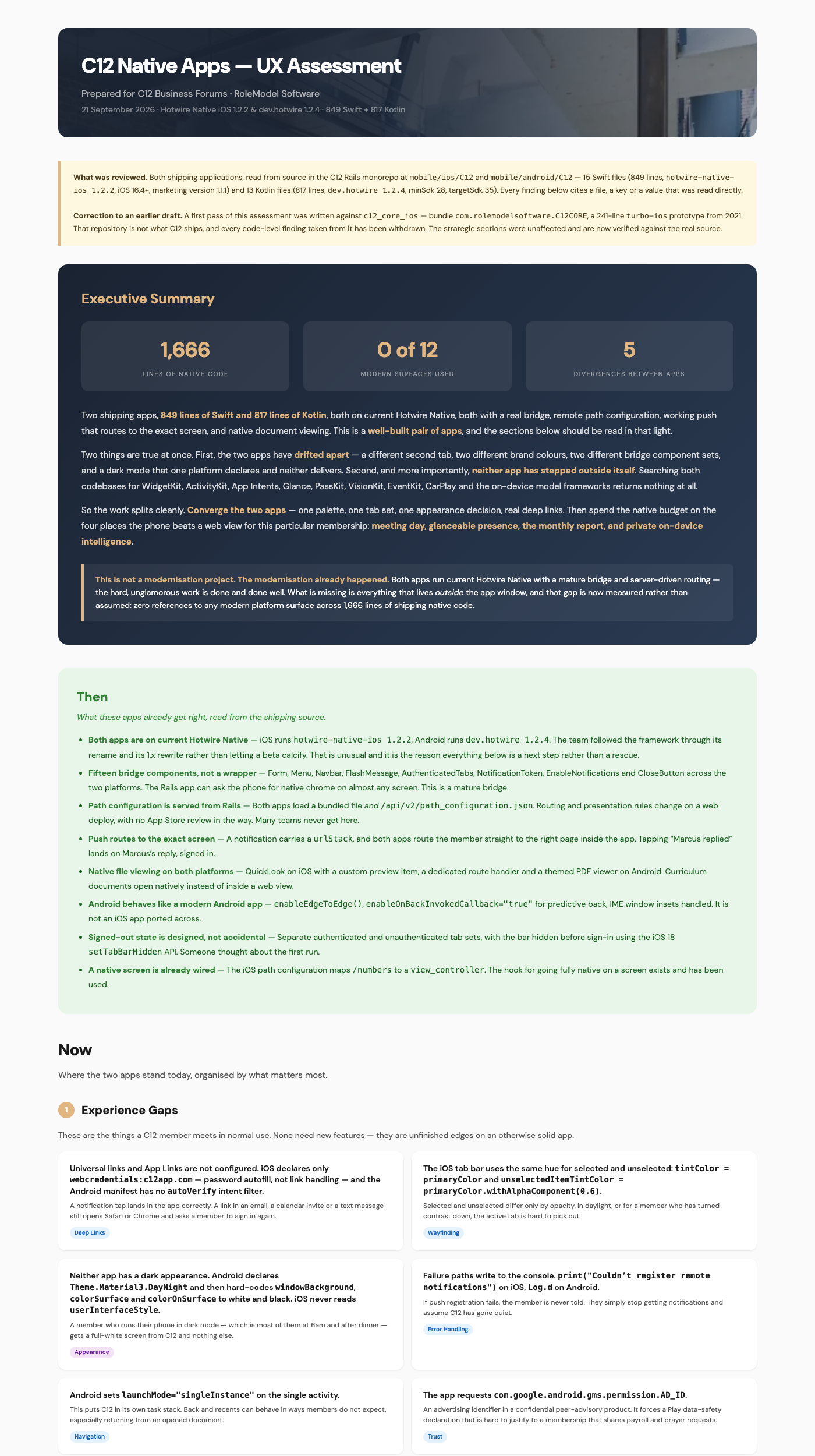
Cross-platform assessment
Twenty-four findings read from both shipping codebases, five divergences between the two apps, twelve UX principles, and three effort tiers.
Read the assessment →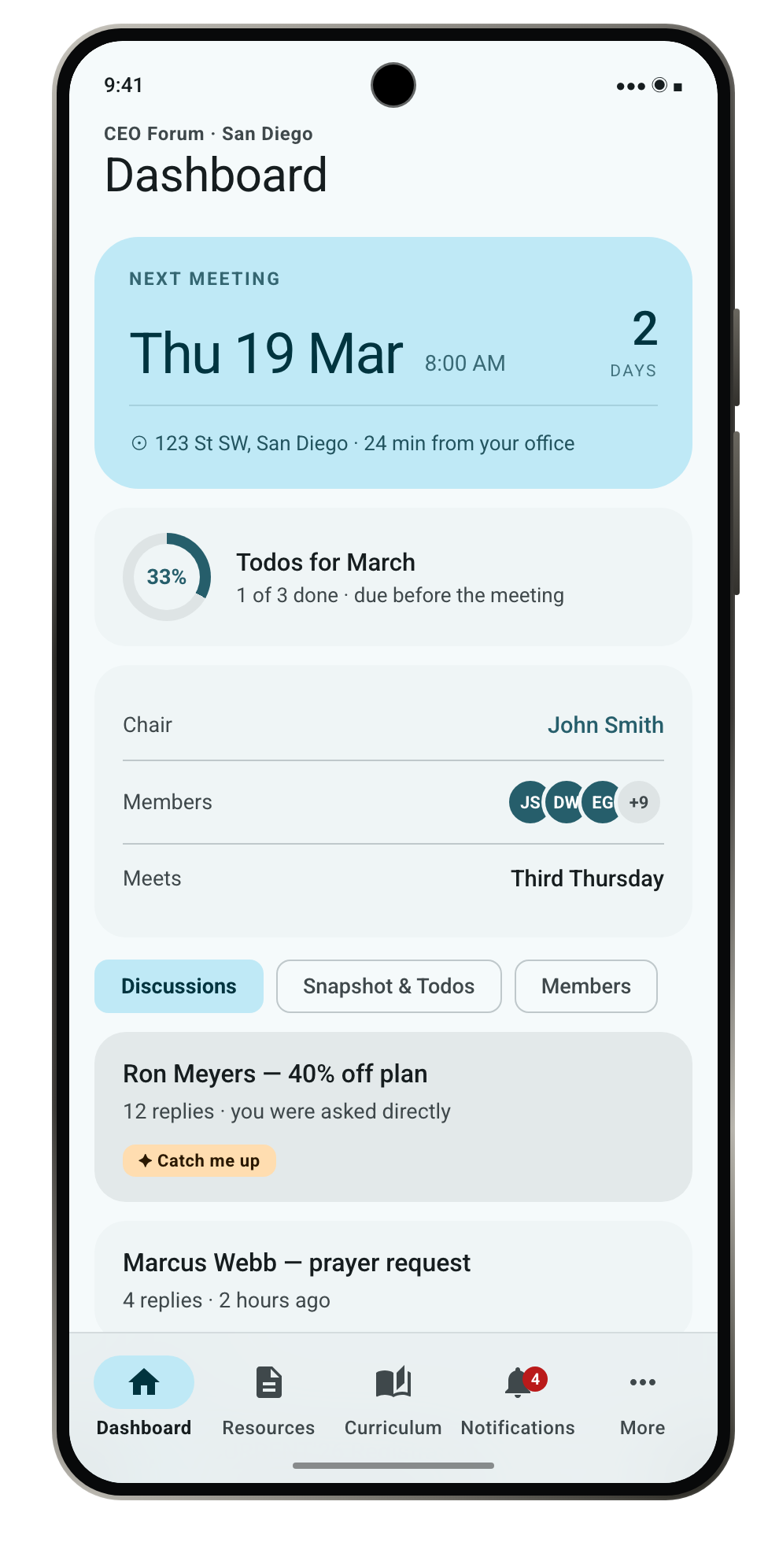
The Android prototype
The same sixteen scenes on a Pixel frame, in Material 3 Expressive, using the app’s own vector icons. Live Updates, Glance widgets, Gemini Nano.
Open the Android prototype →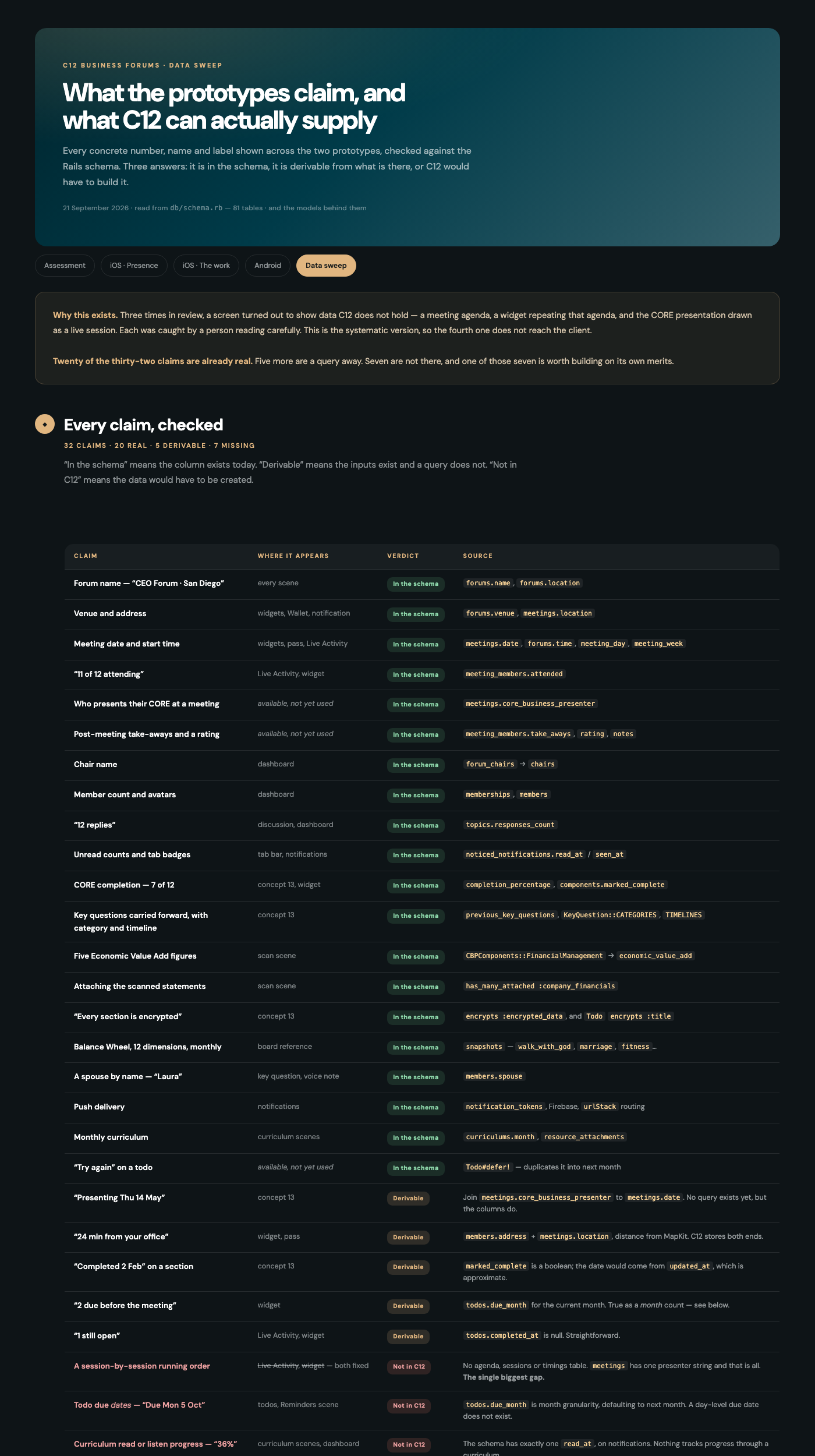
What the data can actually support
Every number and label in the prototypes, checked against 81 tables. Twenty are already real, five are a query away, seven are not there.
Open the sweep →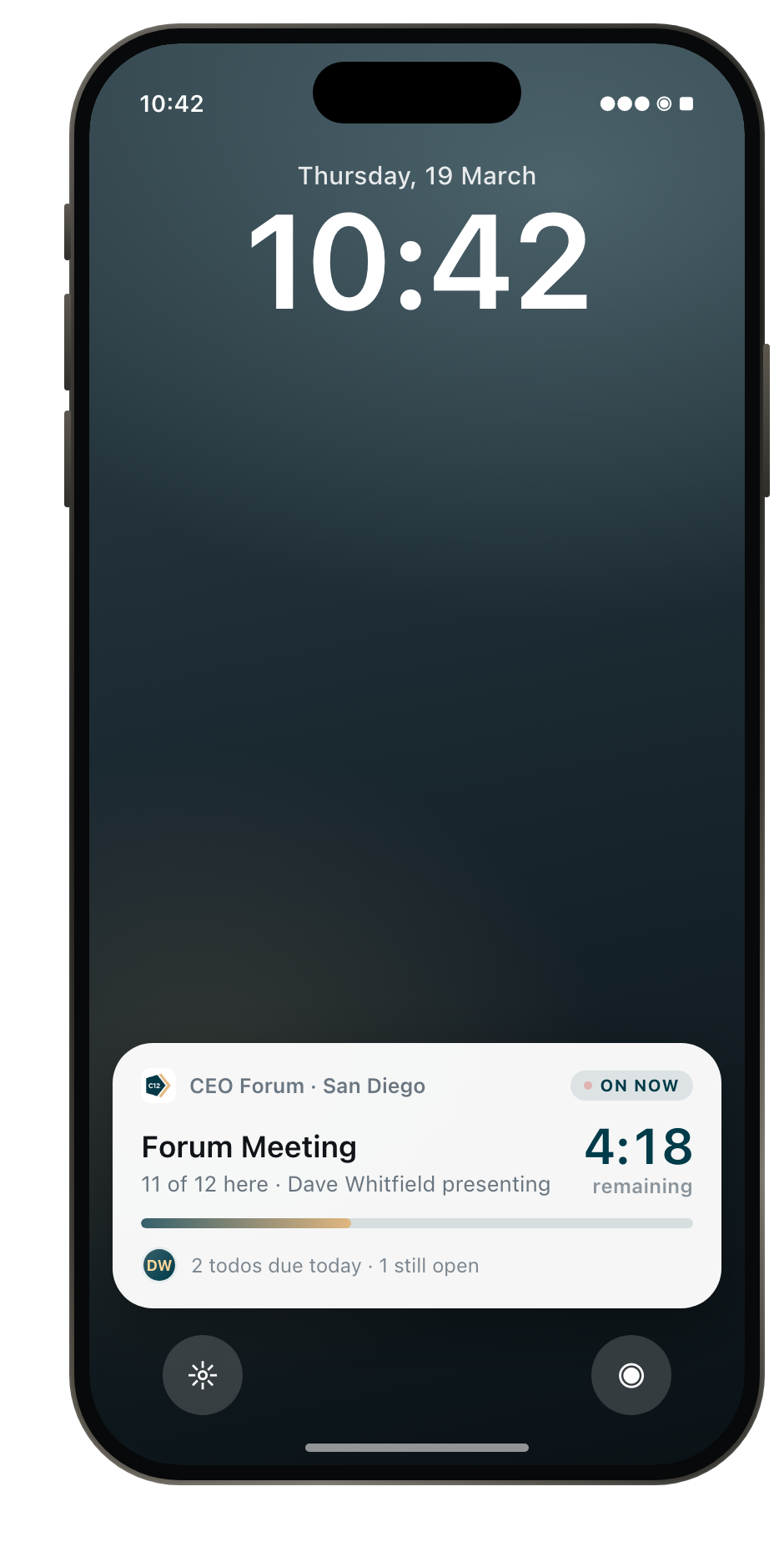
Voice-over scripts
Parallel iOS and Android scripts — beat sheets, timings and continuous reads, cut against 52 device screenshots.
Open the iOS script →Design boards
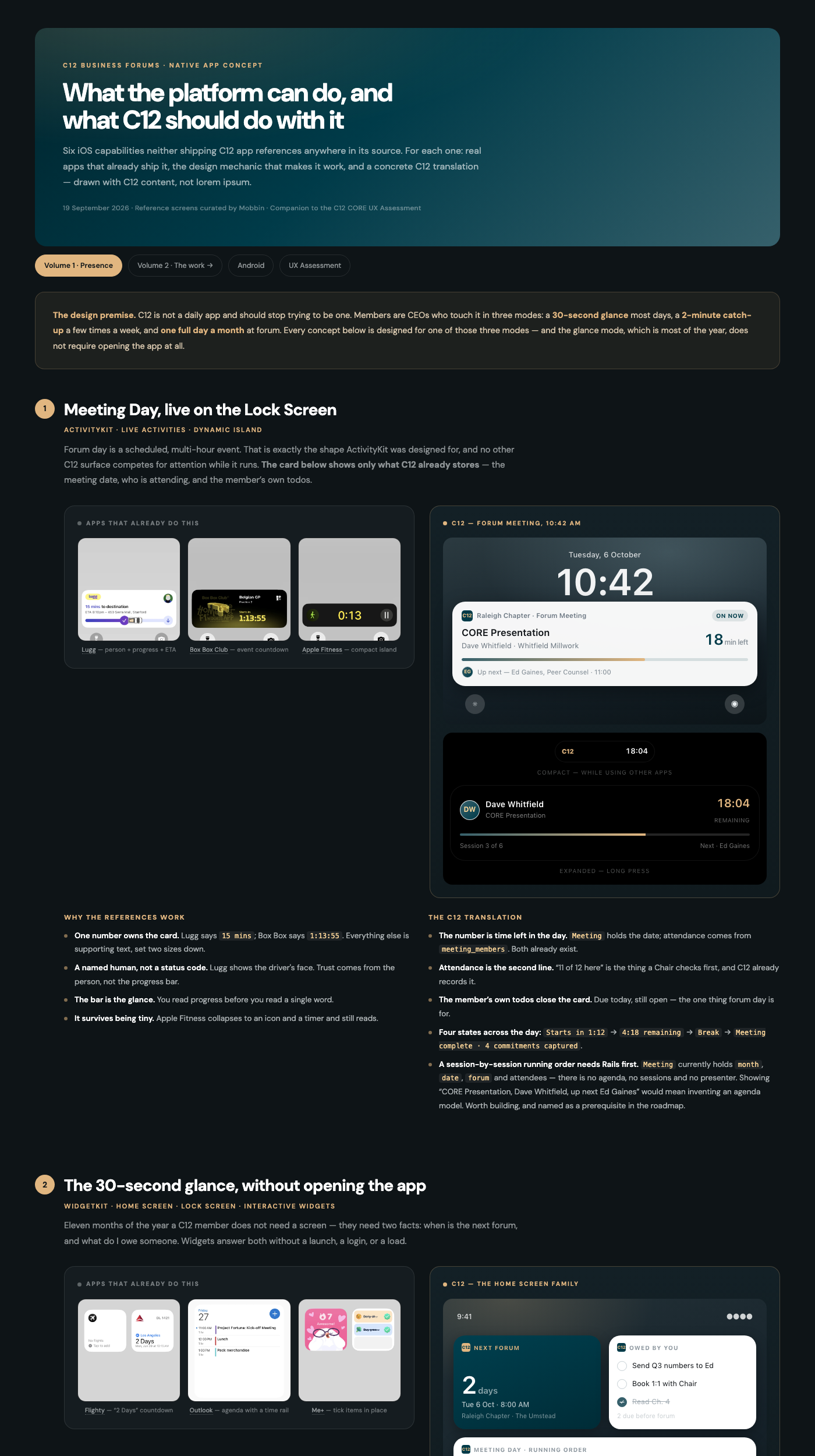
What the platform can do, and what C12 should do with it
Live Activities, widgets, Liquid Glass, on-device summaries, notification actions and passkeys — each paired with apps that already ship it.
Open volume 1 →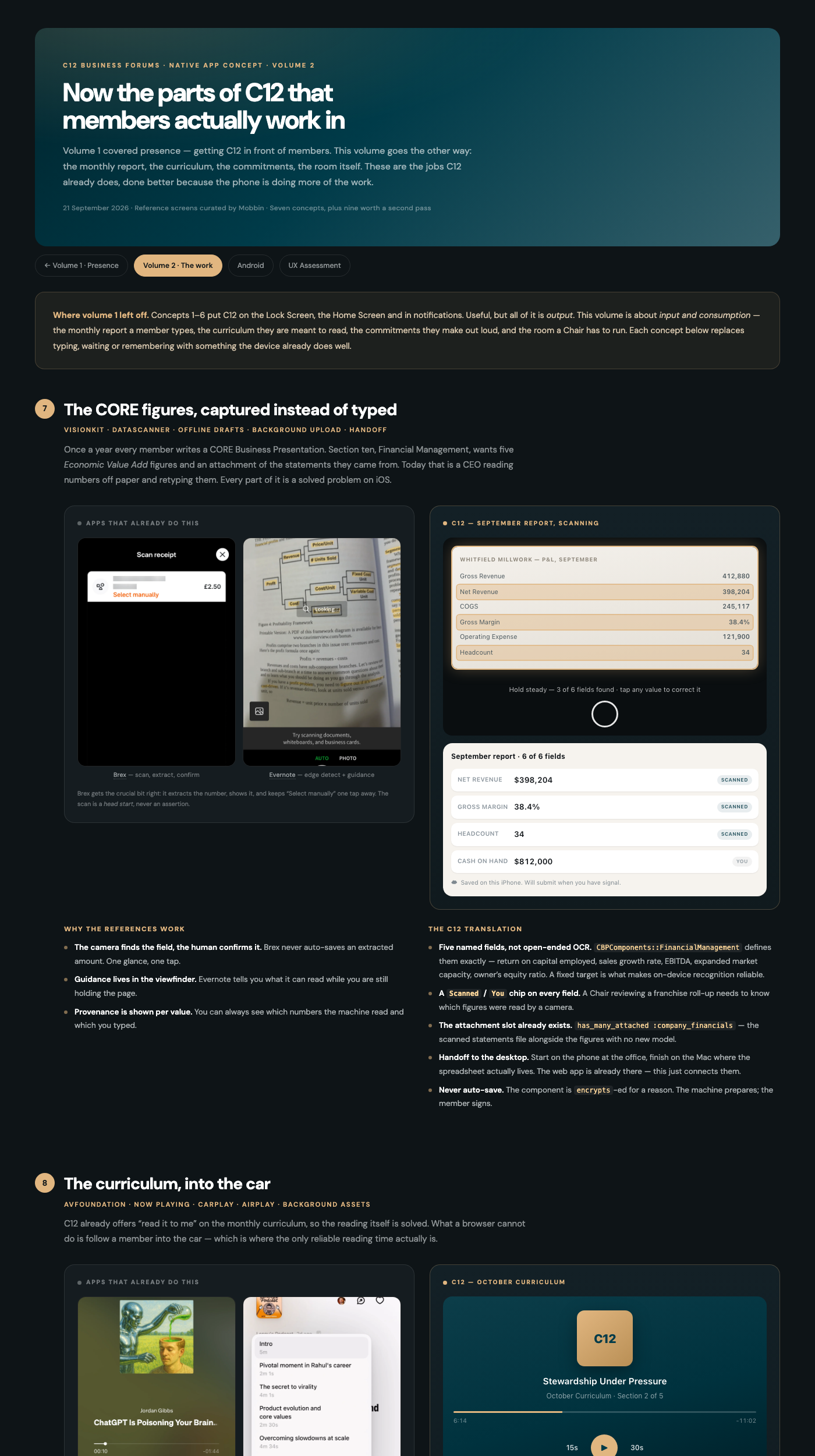
The parts of C12 that members actually work in
Capturing the annual CORE figures, curriculum into the car, a Wallet pass, voice to commitments, Reminders, and designing for a membership over forty-five.
Open volume 2 →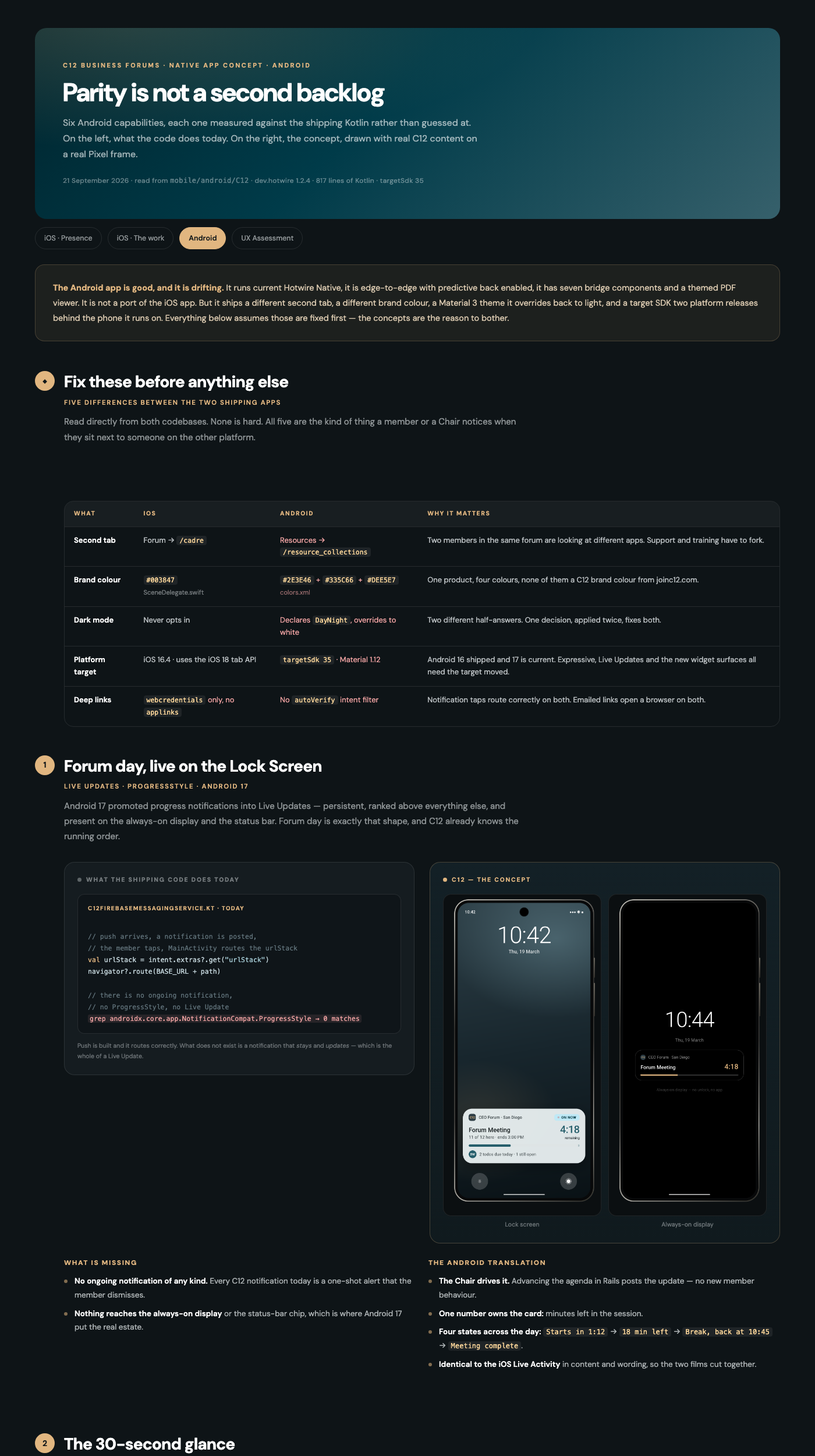
Parity is not a second backlog
Six Android capabilities measured against the shipping Kotlin, with the five divergences between the two apps laid out side by side.
Open the Android board →The argument
Volume 1 makes C12 visible. Volume 2 makes it lighter. Neither rebuilds C12 natively — every concept sits in the native shell around the same Rails application that already serves 2,900 members.
Everything in this bundle
mobile/ios/C12 (15 Swift files, Hotwire Native iOS 1.2.2, iOS 16.4+) and
mobile/android/C12 (13 Kotlin files, dev.hotwire 1.2.4, targetSdk 35).
An earlier draft was written against c12_core_ios, a 2021 turbo-ios prototype that C12
does not ship; those code findings have been withdrawn.All C12 screens are concepts drawn for this assessment. Member names, companies and figures are illustrative and fictional.
Reference screens curated by Mobbin · C12 context from the RoleModel case study.